12/28/11

Vitas Luckas

Vitas Luckus was born on May 29, 1943 in Kaunas, Lithuania. At the age of eighteen, after graduating with a degree in drawing and painting, his parents gave him an AGFA camera, which initiated his fascination in photography. In the following years he developed a great interest in art photography and became a member of the Kaunas Photo Club, to which he was elected president a few years later.

According to Luckus, the conventional use of light and visual arrangement of a photograph would leave out essential elements that could retrieve the vitality and different levels of reality. He advocated a style in which there was no hierarchy of meaning: every element in the photographic composition was of equal importance. Only then was it possible to capture the “truth” and represent the essence of a scene, of life itself.
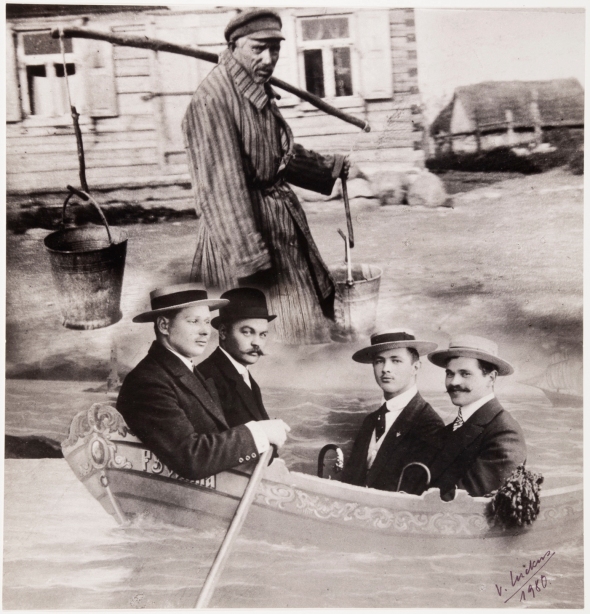
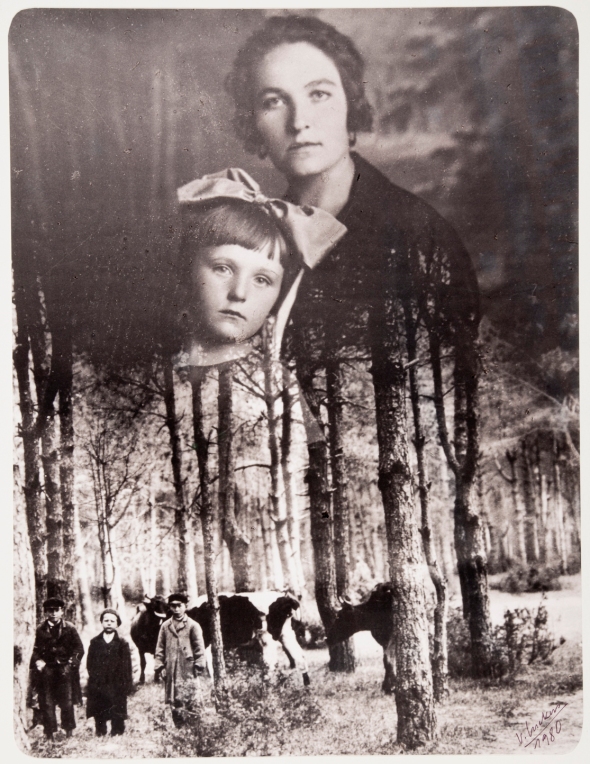
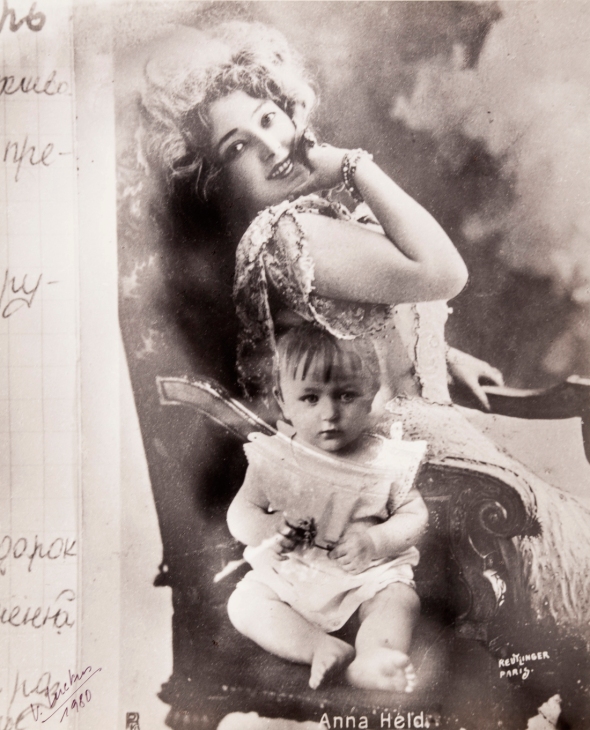
For his series, and last work, Attitude towards Old Photography, Luckus made montages from a large collection of photographic images other than his own. In the book he created of these works, text and titles were deliberately excluded to maintain the unity of his constructed realism. In his diary he wrote:
In the beginning I tried to classify my work according to social phenomena and photographical style, emphasizing the topic of life and death. This made me feel like a Lithuanian artist carving statues of God or the saints. When I put everything on the table, however, I felt like a god myself. In front of me I had an Asian and a Red Indian, a Negro, a white, a Moslem, a Buddhist, a Christian, the Czarist army, the Polish army, the Kaiser, the war, funerals and weddings. I shuffled thousands of images into a heap an found they were an orderly heap of life, because everything here was life and because all of us, whether a boxer, a Czar, a beggar or a half-naked woman were disclosed here. Archive photography seemed to me to reflect a bottomless well, waiting for someone to look into it and understand it.
Luckus was known to drink excessively and experienced ongoing confrontation with the authorities. This battle was set off by his refusal to adhere to the conventional standards of beauty, regulations that were firmly guarded by the Lithuanian government. In 1987, during a visit from several men to his home, Luckus got into an argument with one of the men, who was later identified as a KGB agent. The fight became violent and Luckus stabbed and killed the man. Only moments after the incident, Tanya Luckiene, his wife, found Luckus: he had jumped to his death from their balcony.
Together with Aleksandras Macijauskas, Vitas Luckus is considered to be a reformer of the traditional romantic realism within Lithuanian photography.
Source: Vitas Luckus: The Hard Way. Photographer, Lithuania, 1943–1987. Zurich: Edition Stemmle, 1994
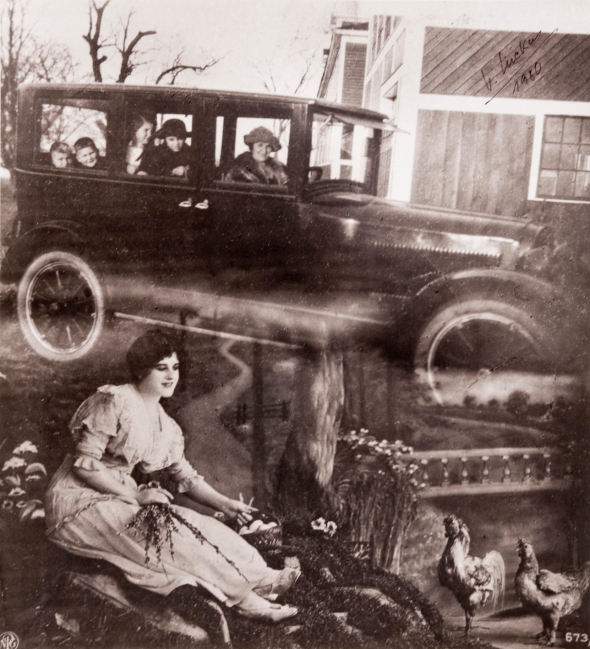
Vitas Luckus, Holiday mood, 1980
Vitas Luckus, Different water, 1980

Vitas Luckus, It seems nobody of them to be alive now, 1980

Vitas Luckus, Anna, 1980


Autochromes

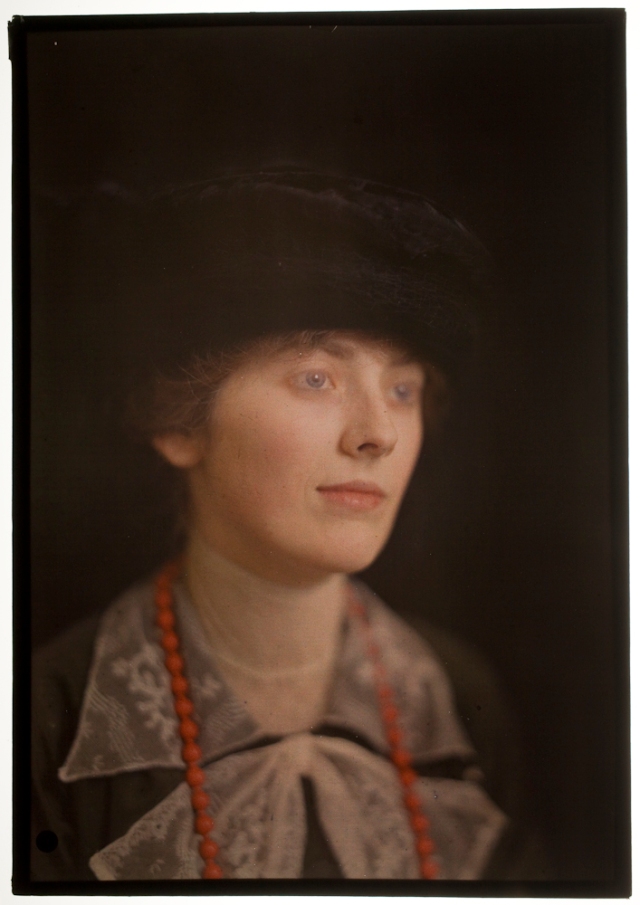
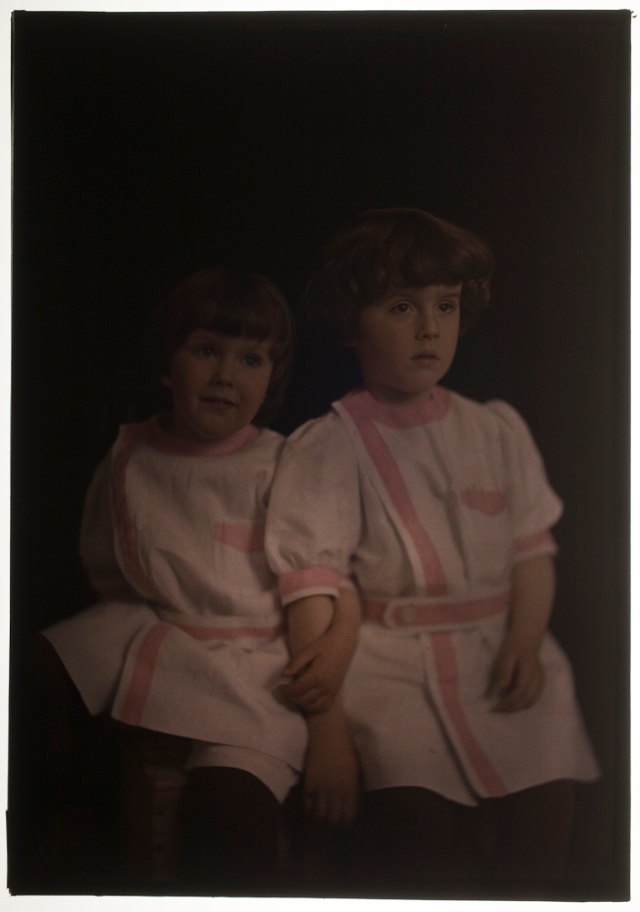
John B. Trevor (1878–1956) was an American lawyer and one of the most influential unelected officials active in the Immigration Act of 1924. After World War I, Trevor was a captain in a military intelligence unit in the U.S. Army and was decorated as Chevalier in the French Légion d’Honneur for his assistance to the French Army. A passionate amateur photographer, Trevor discovered Autochrome Lumiere plates in 1907 while vacationing in France. ICP’s collection of Trevor’s autochromes depicts his family, friends and curios he collected from his many vacations aboard. This collection is a brilliant observation of a lifestyle well forgotten but preserved in such a magnificent process.
Brian Paumier, ICP-Bard MFA, 2012
John B. Trevor, Emily Winthrop, 1910

John B. Trevor, John B. Trevor and Bronson Trevor, ca. 1912
John B. Trevor, Mrs. John B. Trevor, ca. 1914

J. B Trevor, Mrs. John B. Trevor, ca. 1914

Lewis Baltz


Now that we are more than thirty years in the future, it is interesting to see how the work has fared. Some of it has in fact taken on this nostalgic aspect, such as some of the more popular work by Stephen Shore, which often included cars and other ephemeral objects. But some images have retained a very similar sensibility to the day they were shot. The work of Lewis Baltz (born 1945) in particular stands out in this way. Baltz photographed places that seem to lie outside of time: industrial parks, housing developments, construction sites. But in addition to his choice of subject matter is his decision to shoot in stark, geometric, high-contrast images that, while having a compelling geometric formalism, refuse to soften the bleakness and occasional loathsomeness of the imagery by falsely beautifying the subject matter.
The images included here are some of Baltz’s that best capture this exploration of the banal landscape of the American West. They are from a number of his series, including Park City. In the Park City images, he recorded the conversion of a mining town into a middle class ski resort. Looking at the Park Meadows image, we see a pile of dirt and rock, a byproduct of development. The next image, Looking North from Masonic Hill, we see the rectangles of human development appearing alien against the hills. Both images show the cross between the natural and cultivated, human space. The Park City interiors put us now inside the developments, showing us the triumph of human geometry against the curves of nature.

Daniel Temkin, ICP-Bard MFA 2012

Lewis Baltz, Park City, interior, 37, from the Park City series, 1979
Lewis Baltz, Park City, interior, 9, from the Park City series, 1979

Lewis Baltz, Park Meadows, Subdivision 2, Lot 64, looking West, from the Park City series, 1979

Harold Edgerton, Driving the Golf Ball, 1935


photographer Brett Weston

Brett Weston (American, 1911-1993), son of the renowned American photographer Edward Weston (1886-1958), explores the relationships between spaces and planes flawlessly throughout his corpus of work. At times, context is avoided in favor of ambiguity and eventually certain works begin to transform across dimensions. Simply put, Weston’s photography has the ability to synthesize nature and naturalize the synthetic–truly, and completely, altering our perception of the world around us.
Brett Weston, Lichen Covered Rock with Viny Succulent, ca. 1950
Brett Weston, Hanging Leaves and Ground Cover, Bronx Botanical Garden, 1945
Brett Weston, Two Windows with Ivy, New York, ca. 1945
Brett Weston, Apartment Windows with Wrought Iron Gate, New York, 1944
Brett Weston, Reflections, New York, 1971

Richard Avedon, [Contact sheet of Marilyn Monroe posing with dog], 1958


Weegee, [The World Goes Nuts], ca. 1943. © Weegee/International Center of Photography


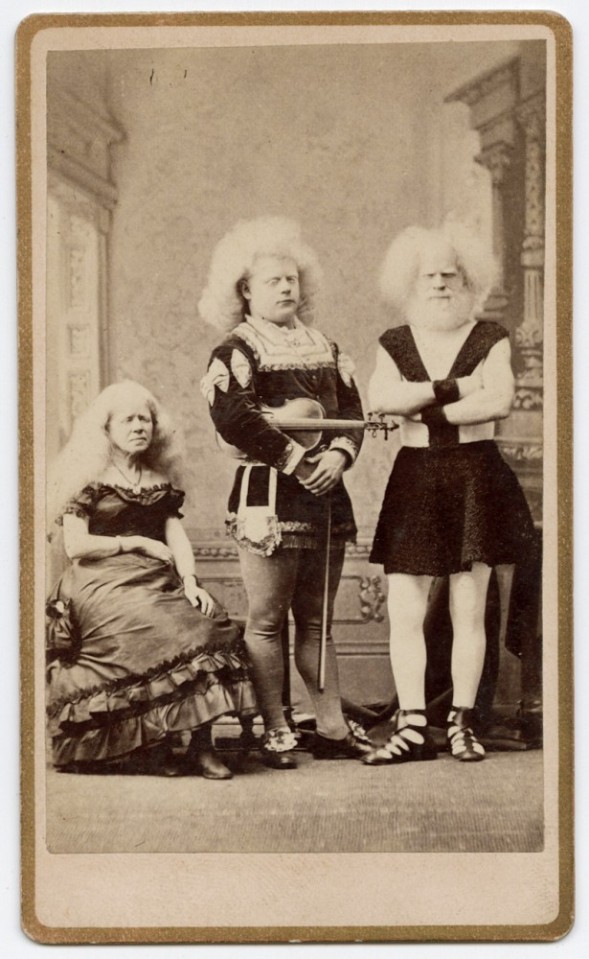
Charles Eisenmann, The Original Eliophobus Family: Rudolph Lucasie, Wife and Son, ca. 1875


11/21/11

Visual Representations of 15 Over-Used Movie Poster Clichés - from Flavorwire

faces made out of film elements
the thriller
vigilante movies
animal movies
type over face  genre
black and white w/red- action flick!
tom cruise, always in profile?
tough love flick
will have sex scenes
horror movie
independent flim

10/12/11

one from Kinokuniya Japanese book store

http://bookweb.kinokuniya.co.jp/guest/cgi-bin/wshoseaohb.cgi?W-NIPS=9986794447&AREA=02&LANG=E

10/10/11

NYC


Untitled, originally uploaded by jessicakrausesmith.

Opening Clam


IMG_7635, originally uploaded by jessicakrausesmith.
West Island, MA
Feb. 2009

Colosseum!


IMG_5159, originally uploaded by jessicakrausesmith.
Rome, OCTOBER 2010

Girl outside of Cuzco, Peru

from my photo archives... May 1999